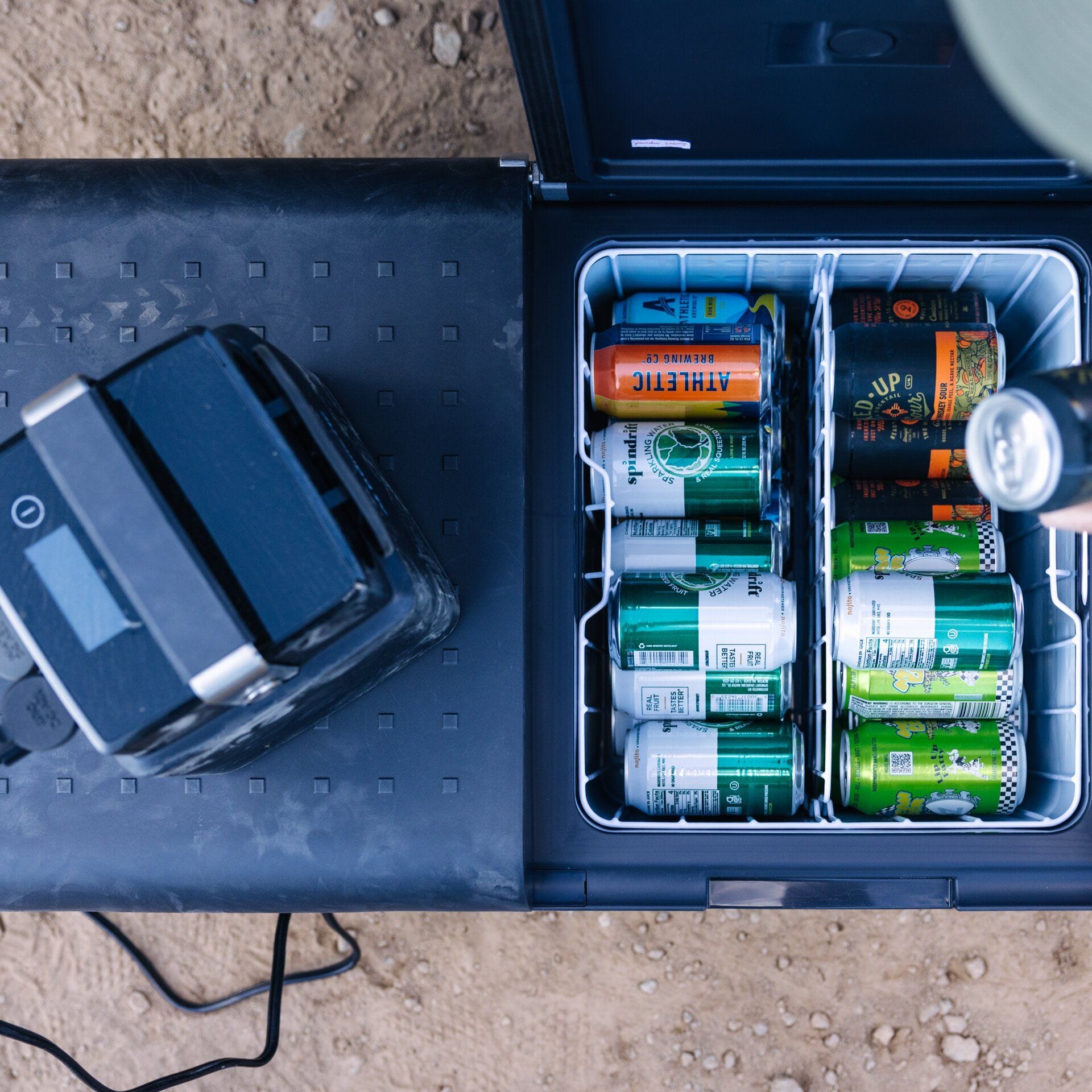
Anyone who has spent a week living out of a truck knows the moment a cheap ice chest turns against you. The ice melts faster than expected, the meltwater floods your food bag, and by day three you are eating soggy sandwiches and rationing your drinking water because much of your ice has melted just to keep your food cold. Overlanding pushes gear to its limits in a way a weekend camping trip never does, and nothing exposes weak equipment faster than a long stretch off the grid with no store in sight.
A mobile cooler solves the problem that ice never really could. It holds a steady temperature for as long as you have power, uses every inch of its interior for food instead of ice, and keeps working whether you are parked in desert heat or grinding through a mountain pass. For overlanders, that reliability is not a luxury add-on. It is one of the pieces of gear that decides whether a multi-day trip actually works.
Here is why a mobile cooler has become one of the most valuable pieces of equipment for serious overlanders.
Keep Food Safe Without Constant Ice Runs
Ice may seem like a simple solution, but it becomes less reliable the longer your trip lasts. No matter how carefully you pack your cooler, the ice will eventually melt, raising the inside temperature and reducing how long your food stays safe to eat. However, a mobile cooler is designed to eliminate that problem by using compressors to maintain a constant temperature throughout your trip, even for several days at a time.
Of course, bringing frozen food before departure and packaging it properly will make a difference, particularly at the beginning of your journey. The USDA also recommends freezing food before leaving and packing it with a reliable cold source to help keep it at a safe temperature during outdoor trips. However, no matter how good your packaging method is, it can only keep food cold for a limited amount of time. A compressor-cooler operates continuously, so there is no need to rely on melting ice to keep food cold . This means you’ll make fewer stops to buy ice and spend less time worrying about food spoilage.

Free Up Space: Ice Chests Waste
An old-fashioned cooler devotes a good portion of its internal capacity to ice rather than food, and the disparity worsens with the increasing duration of the journey. For every additional day one spends traveling, there is a need for more ice, which reduces the capacity to store consumable goods. The use of a portable cooler eliminates this problem. Rather than having to carry bags of ice before each trip or replace melting ice in transit, all storage capacity is devoted to groceries, beverages, and food supplies. Planning meals before leaving also helps you make the most of the extra storage space.
Every liter of internal storage space is devoted to food and beverages; as a result, you can fit significantly more supplies into a unit of similar volume. This increased storage space also gives you more freedom in menu planning, allowing you to use fresh ingredients rather than just packaged foods, which take up less space. For people traveling in a group or the overland driver looking to prolong his journey beyond seven days, this additional space may prove a decisive factor.
Handle Rough Terrain And Extreme Temperatures
The road surfaces on most overlanding trips are never smooth, and equipment well-suited to smooth road surfaces may not be appropriate for washboard roads and rocky ascents. Compressor coolers designed for such conditions have taken these considerations into account. Most compressors are fitted with springs precisely to counter vibrations from the vehicle over bumpy roads.
What is more important is how the equipment performs under varying temperatures. A good mobile cooler maintains its set temperature even when it is sitting idle on a hot desert plain or moving up mountain slopes in freezing temperatures.

Run On Power You Already Have In Your Rig
One reason mobile coolers fit overlanding so well is that they plug directly into infrastructure most rigs already carry. A typical unit runs on 12- or 24-volt DC power straight from your vehicle, on standard AC power at a campsite, or from a portable battery or solar setup when you are fully off-grid. This flexibility is exactly what makes 12-volt fridges suited to serious overlanders and long-distance travelers who need dependable cooling without babysitting an ice supply.
Modern units also include battery protection systems that stop drawing power before your starter battery drains too far, so you are not left stranded just because you wanted cold drinks. That combination of flexible power input and built-in safeguards is difficult to replicate with anything that relies purely on ice.
Support Longer, More Self-Sufficient Trips
The true worth of a mobile cooler only comes out when one cannot resupply. Long multi-week overland journeys that pass through remote places will lack easy resupply options along the way, and running out of supplies might lead to cutting the journey short or taking a detour into town. This is where the powered cooler completely changes things.
As long as power is available, whether from your engine, batteries, or solar panels, your provisions will remain cool throughout your journey. That level of assurance is exactly what many seasoned overlanders mean when they say that going with a cooler is a permanent decision as opposed to a temporary one. With your mind relieved from worries about ice, you can concentrate on the road, the ground, and the reasons you left home.
Key Takeaway
Overlanding rewards preparation more than almost any other kind of travel, and food storage is one area where the wrong gear choice causes the most disruption. A mobile cooler removes the guesswork that comes with ice, protects your supplies against rough terrain and extreme heat, and runs on power sources you already have with you.
For anyone planning trips that stretch beyond a weekend, it is one upgrade that pays for itself the first time an ice chest lets you down.